
Primary Health Care for Universal Health Coverage.


Health Is Your Right & Responsibility
By Nhau Mangirazi, Newsday
Sadness engulfed Rosina Mujakachi after visiting her pregnant sister battling a malaria attack at Karoi District Hospital two weeks ago.
Her sister was among the over 30 people from the surrounding outlying Hurungwe villages receiving treatment for malaria at the hospital.
It is reported that at least five people died this month at the medical institution when malaria cases peaked in the rural communities, including a malaria hotspot, Kazangarare in Hurungwe North constituency.
Mujakachi said her sister, who is from the Kazangarare area, was diagnosed with malaria. Nyama resettlement is also another malaria hotspot that claimed a local headman last week, according to sources.
Mujakachi was grateful that her sister was being treated.

CWGH Executive Director Itai Rusike
“My concern is on communities which get free mosquito nets regularly but ignore proper use of the nets,” said Mujakachi, adding that most villagers appeared to be reckless about their health.
Hurungwe district medical officer, Munyaradzi Chidaushe, confirmed a malaria outbreak in the area.
“We are calling for precautionary measures from everyone. People must seek medical attention urgently so that we can curb malaria. They must use mosquito nets regularly,” Chidaushe said.
Local transmission in the community has been reduced to very low levels among most outlying rural communities within Mashonaland West province, in three districts, including Chegutu, Mhondoro Ngezi and Zvimba.
Other districts like Kariba, Sanyati, Makonde and Hurungwe are in the control phase where the malaria disease burden is significantly high.
Ironically, last week, Kariba district recorded a surge in malaria cases that reached a peak of 87 cases in one week.

Kariba district medical officer Godwin Muza told stakeholders that the cases were in both urban and rural communities.
Of these 30% are from Msampakaruma rural, with Nyamhunga in Kariba town pegged at 24%.
Kanyati and Kasvisva are at 10% apiece while Gache Gache stands at 8%.
Mahombekombe and Siakobvu have 6% of the cases each.
On April 25, Zimbabwe joined the rest of the world to celebrate World Malaria Day amid renewed calls for community education to support malaria eradication.
Women Action Group director Edna Masiiwa commended Zimbabwe for making positive strides in combating malaria through donor support.
“Fortunately, Zimbabwe has sound policies on malaria with full-fledged personnel at the ministerial level covering all communities with the support of grassroots community health workers. Some donors, including the Global Fund, are pushing the country’s agenda of malaria eradication. We hope it further helps the country to reinvest and reimagine its focus on the malaria thrust,” she said.
Masiiwa, however, noted that the health sector faces challenges of worker flight.
“Retention of some workers in health sector remains a challenge, but we hope and trust that it will be corrected sooner rather than later,” she added.
She bemoaned abuse of mosquito nets in some communities.
“As a country, we must continue with community education to help those mostly affected in remote areas understand the positive gains of using mosquito nets donated freely for their well-being. It’s a challenge that the country faces and needs a holistic health approach to overcome,” Masiiwa, a women’s rights advocate, noted.

Mrs Masiiwa
Community Working Group on Health executive director, Itai Rusike, admitted that malaria remains a national health challenge.
“The burden is particularly devastating for pregnant women and young children,” Rusike said.
He added that sustained funding was critical to keep prevention and treatment efforts on track.
“If mosquito nets and preventive medicines for pregnant women are unavailable, lives will be lost. When the supply of test kits and first-line treatments is disrupted, malaria cases and deaths spiral. Investing in the fight against malaria not only saves lives but also boosts productivity, creates economic opportunities, strengthens national health security and makes the country safer for everyone,” Rusike said.
“Now is not the time to pause the fight. It’s the time to give everything or risk a surge in malaria cases, growing resistance and the spread of the disease across districts including to non-malaria areas. If left unchecked, malaria will become much harder and more expensive to control, thereby putting millions of lives and decades of progress at risk.”
Rusike, a health advocate, said the country must act decisively to end malaria as a public health threat and build a healthier, safer, more prosperous future for all.
“Everyone must help in the eradication fight,” he said.
Mashonaland West provincial health promotion officer, George Kambondo, said World Malaria Day was a reminder for continued efforts to eliminate malaria and ensure a healthier future for all.
“Let’s work together to raise awareness, support research and advocate for better healthcare systems. Zimbabwe joins other countries in the world to commemorate Malaria Day. Let’s fight malaria. Together, we can make a difference and save lives,” he said.
Kambondo added that there was a need for combined efforts.
“Let’s remember that every life lost to malaria is one too many. By investing in prevention, diagnosis and treatment, we can save lives and build stronger, healthier communities,” he said.
According to government, Manicaland province is the most affected province, contributing 40,7% of malaria cases and 38,8% of deaths in the country, followed by Mashonaland Central, which contributed 28,2% of cases and 24% of deaths.
“Children under 5 years of age account for 14% of the cases. Nationally, there were 36 423 malaria cases with 85 deaths recorded,” the statement by the Health and Child Care ministry said.
On a positive note, Africa stands at the forefront of a revolutionary shift in global health, driven by artificial intelligence (AI) and data science, according to a report released in early April.
The landscape presents an unprecedented view into the potential to improve AI governance in Africa to reduce the risk and stop the perpetuation of inequity.
Titled Governance of Artificial Intelligence for Global Health in Africa, the report was sponsored by Science for Africa Foundation after a culmination of a year-long effort involving convenings across Africa’s five regions, policy analysis and extensive surveys to identify policy gaps and opportunities in AI and data science for global health.
This year’s theme is Malaria ends with us, reinvest, reimagine and reignite, calling for renewed investment, innovation and commitment at all levels of the malaria eradication community to accelerate progress towards ending the disease.
Globally, there were 597 000 malaria deaths in 2023, with 263 million new cases of malaria in the same year.
According to the World Health Organisation (WHO), 95% of malaria cases are in the African region.
The global community recommitted to eradicating malaria in the late 1990s and, as a result, an estimated 2,2 billion cases and 12,7 million deaths have been prevented over more than two decades.
WHO noted that after years of a steady decline, progress has stalled.
“Further progress and decades of hard-won gains are in jeopardy.
Extreme weather events, conflict, humanitarian emergencies and economic stresses are disrupting malaria control efforts in many endemic countries, leaving tens of millions of people with limited access to the services they need to prevent, detect and treat the disease,” WHO said.
It added that without prompt treatment, malaria can rapidly escalate to a severe illness and death.
“It’s time to recommit to ending malaria. We have the knowledge, life-saving tools and targeted prevention, testing and treatment methods to defeat this disease.
We must reinvest in proven interventions, reimagine our strategies to overcome current obstacles and reignite our collective efforts together with countries and communities to accelerate progress towards ending malaria,” WHO said. – Newsday

Click link for details:
https://drive.google.com/file/d/1NqzTA5TUmC0yG-WHN2pEXFChZj5zWXY0/view?usp=sharing

Robin Muchetu, Health and Gender Editor
THE High Court’s landmark ruling that struck down key parts of Zimbabwe’s restrictive abortion law as unconstitutional has drawn strong reactions from public health advocates and gender-rights organisations, who say the decision marks a long-overdue step towards protecting vulnerable women.
Justice Sylvia Chirawu-Mugomba ruled that Section 4(a) of the Termination of Pregnancy Act (Topa) of 1977, as well as the definition of “unlawful intercourse” under Section 2(1), are unconstitutional and invalid.
Parliament now has 18 months to amend Topa to align it with the Constitution and to incorporate protections required under the Mental Health Act.
Justice Chirawu-Mugomba decision followed an application by the Community Working Group on Health (CWGH) and Member of Parliament Nyasha Batitsa, who argued that the law unfairly excluded women with mental illness from accessing legal termination, even in cases of sexual exploitation.
The judge found that the decades-old Act fails to recognise that women with mental health conditions may be unable to consent to sexual activity and are therefore at heightened risk of abuse. By excluding them, the judge ruled, the law violates constitutional guarantees of equality, dignity, humane treatment and bodily autonomy.
“The statutory omission creates a discriminatory regime, forcing women to carry pregnancies that cause grave mental-health consequences,” Justice Chirawu-Mugomba said.
Although the affected provisions have been declared invalid, the order has been suspended for 18 months while Parliament amends the law. The ruling has also been referred to the Constitutional Court for confirmation.
Justice Sylvia Chirawu-Mugomba suspended for 18 months from the date of the order to enable the respondents to amend the provisions in the Termination of Pregnancy Act as cited to include mental health and conduct proscribed in Section 106 of the Mental Health Act.
“The above declarations of constitutional invalidity are suspended until such time as the Constitutional Court has confirmed the same in terms of section 167(3) of the Constitution of Zimbabwe. The above order of constitutional invalidity is referred to the Constitutional Court for confirmation in terms of section 175 (1) of the Constitution. There shall be no order as to costs,” she ruled.
CWGH executive director Mr Itai Rusike said the judgment marks a reflective shift in the country’s reproductive-rights landscape.
“It shifts the legal framework from a narrow, biomedical model of abortion, centred solely on physical survival, to a constitutional model grounded in dignity, equality and holistic health,” he said.
“Recognition of mental-health risk as a standalone indication for lawful termination modernises an area of law historically shaped through punitive colonial codes that disregarded women’s lived realities.”
Mr Rusike noted that the ruling elevates mental health within the country’s constitutional right to health and may have wider implications for health-sector reforms.
“This opens space to challenge insurance exclusions on psychiatric services, the chronic underfunding of mental-health care, and policies that treat mental health as secondary,” he said.
Mr Rusike said the decision also aligns Zimbabwe with regional and international obligations under instruments such as the Maputo Protocol and Cedaw.
Women’s rights groups said the court’s recognition of the vulnerability of institutionalised or mentally ill women, particularly under Section 106 of the Mental Health Act, is a major advance.
They argued that previous legal provisions offered little protection to women who cannot consent to sex yet were denied legal termination if they fell pregnant through abuse or exploitation.
Women’s Action Group (WAG) programmes officer Ms Vimbai Nyika said the ruling places new responsibility on the media to ensure accurate, sensitive coverage of abortion and sexual and reproductive health rights (SRHR).
“We want to strengthen the capacity of journalists to report ethically and sensitively on safe abortion and SRHR. With unsafe abortions happening around us, media narratives matter,” she said.
“They influence public understanding, policy debates and ultimately national productivity. The media has the power to educate, inform and support rights-based approaches to these issues.”
Zimbabwe’s current abortion law, passed in 1977 during the Rhodesian era, allows termination only when a woman’s life or physical health is in danger, when the foetus faces severe disability or when the pregnancy results from “unlawful intercourse”. Mental-health grounds are not recognised.
Applicants in the case argued that this omission violates constitutional rights to dignity and health, noting that mentally ill women cannot consent to sex and therefore must have access to legal termination.
—@NyembeziMu
… Ruling significantly expands access to legal abortion for mentally ill women and victims of institutional sexual abuse
By Staff Reporter, 17 November 2025

Human rights lawyer Tendai Biti argued for women with mental health challenges to be granted the right for legal abortion
By Staff Reporter, 17 November 2025
HARARE — The High Court has delivered a landmark ruling declaring parts of Zimbabwe’s abortion law unconstitutional, finding that provisions of the Termination of Pregnancy Act violate several fundamental rights, particularly the rights of mentally ill women and victims of sexual abuse in mental health institutions.
Justice Slyvia Chirawu-Mugomba, handing down judgment, ruled that section 4(a) of the law governing the circumstances under which a pregnancy may be lawfully terminated “to the extent that it excludes mental health” fails to meet constitutional standards and unjustifiably limits key rights such as dignity, equality, and the right to health.
The applicants, the Community Working Group on Health and Member of Parliament Nyasha Batisa, challenged the constitutionality of the law, arguing that it discriminates against mentally ill women by permitting pregnancy termination only under narrow physical-health exceptions.
They sought declarations that both s 4(a) and the definition of “unlawful intercourse” in s 2(1) of the Act are unconstitutional.
In a detailed 25-page ruling, Justice Chirawu-Mugomba found that the law’s failure to recognise mental health as a basis for accessing safe and lawful abortion imposes a discriminatory and unconstitutional burden on women with mental health challenges.
The judge noted that the applicants had “well-articulated the impact of the exclusion of mental health as a ground to access safe abortion,” concluding: “Therefore, s 4(a) in my view, to the extent that it excludes mental health, does not meet the standards enunciated in the constitution…
“It is clear that women with mental health challenges are treated differently when it comes to the permissible health-related grounds for termination.”
Justice Chirawu-Mugomba rejected the argument by the minister of health that mental health risks were already implicitly covered under “life-threatening” physical conditions, holding that such an interpretation would be “not explicit” and left vulnerable women without clear legal protection.
She emphasised that mental health is integral to overall health, citing evidence of “genuine challenges women experience with mental health, including those that may arise after childbirth.”
The judge also held that the definition of “unlawful intercourse” in s 2(1) is unconstitutional because it fails to include sexual abuse defined under s 106 of the Mental Health Act, which criminalises sexual intercourse with mental health patients.
The judge said in the November 11 ruling: “Excluding mental health in the definition of unlawful intercourse, as proscribed in s 106… denies women in such circumstances access to safe abortion services.”
She found that the omission violates multiple constitutional rights, including the right to life (s 48), dignity (s 51), equality (s 56), and reproductive health (s 76), noting that mentally ill women “face legal and procedural barriers to accessing necessary reproductive healthcare.”
The judgment sharply criticised the inconsistency between the Termination of Pregnancy Act and the Mental Health Act, observing: “The inconsistency between these legislative frameworks undermines the principle of equality before the law.”
While acknowledging parliament’s primary role in law-making, the judge said that courts are constitutionally required to intervene where rights are unjustifiably limited.
She noted: “Judicial intervention is necessary to uphold constitutional rights, fill legal gaps, or develop the law in line with evolving social values.”
The court considered whether to “read in” new provisions – a remedy used where a statute is unconstitutional due to an omission – but concluded that the applicants had not framed their requested relief with sufficient precision.
The judge ultimately declared portions of s 4(a) and s 2(1) unconstitutional but suspended the declarations, as required by section 175 of the constitution, pending confirmation by the Constitutional Court.
The judge ordered: “The above declarations of constitutional invalidity are suspended until such time as the Constitutional Court has confirmed the same… The above order… is referred to the Constitutional Court for confirmation.”
No order as to costs was made.
Rights lawyer Tendai Biti brought the application on behalf of Batitsa and the Community Working Group on Health. – ZimLive
By Gamuchirai Nyamuziwa | Oct. 31, 2025
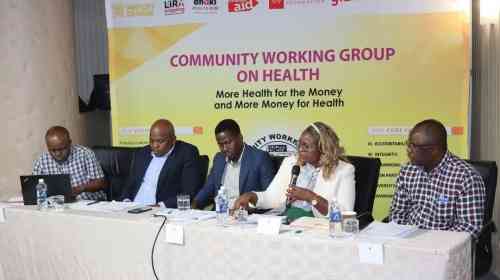
The deficit is crippling the country’s ability to provide even the most fundamental services, the CWGH said.
ZIMBABWE’S public health system is facing a catastrophic shortage of nearly 58 000 skilled workers, a deficit so severe it requires the government to hire an average of 9 758 new staff annually until 2030 just to achieve basic health coverage, a new health sector position paper claimed this week.
The report by the Community Working Group on Health (CWGH), which lays out critical priorities for the 2026 National Health Budget, warned the current health worker establishment is out of line with the nation’s growing population and escalating disease burden.
The deficit is crippling the country’s ability to provide even the most fundamental services, the CWGH said.
It claimed as of 2023, Zimbabwe’s health workforce stock stood at just 47,5% of the national need, representing a “need based shortage of 57 543 health workers”.
This chasm between the required and actual staff levels has extensive implications on health outcomes, pushing the system to the brink of collapse, analysts also warned.
The report underscored the urgency for a resilient and motivated health workforce, a goal that remains elusive under current conditions.
“Therefore, it is essential to ensure availability of a resilient, motivated, and fit-for purpose health workforce,” the paper asserted, directly linking the staffing crisis to Zimbabwe’s inability to deliver on its universal health commitments.
To bridge this gap, the CWGH is making an unprecedented call for massive and immediate budgetary action.
“The government needs to demonstrate its commitment to expand MoHCC (Ministry of Health and Child Care) staff establishment by an average of 9 758 workers per year up to 2030 to meet the projected Health workforce need-based shortage,” the report stated.
This level of recruitment is deemed necessary to achieve 80% Universal Health Coverage and 99,1% disease burden coverage, targets that are foundational for the nation’s aspiration to become an Upper Middle-Income society by 2030.
The paper said termination of contracts for USAid-supported health workers had exacerbated the crisis, leaving critical gaps in health facilities and negatively impacting the quality of services.
The CWGH argued that the 2026 budget must not only fund new positions, but also absorb key roles previously supported by donor funds onto the government payroll to ensure sustainability and protect primary healthcare services for the most vulnerable. – Zimbabwe Independent.
Featuring Our First Panel Discussion – “From Collection to Utilisation”
Our vibrant panel discussion explored “From Collection to Utilisation: Making Earmarked Health Taxes Work”
The panel brought together diverse voices:
Hon. Muwodzeri Thomas – Parliamentary Portfolio Committee on Health and Child Care and Primary and Secondary Education
Mr. R. Machengere (ZBCW) – Business perspective
Ms. I. Chirisa (WILSA) – Gender and legal accountability
Mr. J. Tapatapa (ZCC) – Faith-based and moral lens
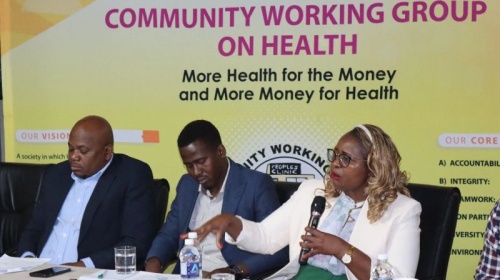
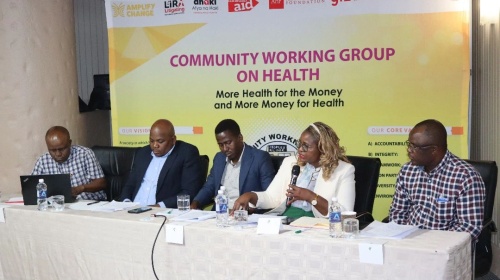
Discussions centred on how to strengthen the link between revenue collection and actual service delivery — ensuring that taxes raised for health truly benefit the people.
Key takeaway: Health financing requires a whole-of-society approach. Businesses, faith groups, women’s organisations, and citizens all play a role in pushing for transparent and equitable use of health funds.
The dialogue underscored that earmarked health taxes can be a powerful domestic financing tool, but only if they are effectively managed, monitored, and reinvested in critical services.
“Every dollar collected for health must be a dollar that saves a life.”
hashtagCWGH hashtagHealthFinancing hashtagUHC hashtagPublicHealth hashtagHealthSystemsStrengthening
Loyce Maturu in maroon floral skirt poses for a photo with health advocates
By Michael Gwarisa
When Otilia Tasikasni learned she was HIV positive in 1991, she believed her life was over. The diagnosis then was not just a medical statement; it was a countdown. Doctors told her she had only two or three years to live, and every day felt like borrowed time.
“At one point, all I would think of was dying,” recalls the 59-year-old, her voice steady but her eyes betraying memories of that period. “Even though I was not sick then or showing any signs of illness, I was just waiting for my day to come… but the day never came.”
At the time, there was no antiretroviral therapy (ART) in Zimbabwe. For years, Otilia remained healthy, but in 2004 her condition worsened, and she was also diagnosed with tuberculosis (TB). She completed TB treatment before finally starting ARVs, a lifeline made possible through the Global Fund’s support to Zimbabwe’s HIV programme.
Today, Otilia has watched her children grow, seen her grandchildren born, and lived decades beyond the expiry date once stamped on her life.
In Bindura, Mashonaland Central, 33-year-old Loyce Maturu’s experience with HIV is different. Diagnosed at the age of 12 with both HIV and TB, she began treatment immediately, a privilege her elder never had. Her journey, however, began in loss. In 2000, she lost both her mother and younger brother to AIDS-related illnesses within the same week. Soon after, she fell seriously ill and was taken in by an aunt who ensured she received care.
Initially, her diagnosis was kept from her, but with the help of Global Fund-supported health workers, her aunt eventually disclosed the truth.
When I found out, I thought I would die just like my mom and brother,” she says. “I lost all confidence. I never thought I would finish school, have a family, or get a job. But thanks to the Global Fund, I accessed TB and HIV treatment, and today my life is full.”
Loyce is now married, a mother to two HIV-negative children, a university graduate, and holds a stable job. She says living with HIV is not without its challenges. “It is not easy taking medication every day, but I am committed to it because I know what is at stake for me and my children,” she says. “I am proud to say I am one of the 65 million lives saved by the Global Fund.”
From Otilia’s struggle in an era when HIV meant certain death to Loyce’s life shaped by early intervention and consistent treatment, their experiences underline a shared truth: access to ARVs transforms HIV from a death sentence into a manageable condition.
This progress is something the Ministry of Health and Child Care (MoHCC) says it is determined to safeguard. Early this year, many countries suffered setbacks in their HIV programmes following the cessation of United States government funding for the majority of HIV initiatives. Zimbabwe, however, has managed to maintain adequate drug stocks through the AIDS Levy and other contributions.
“We made orders using two companies to provide more ARVs. Those stocks are now in place to cover us up to the end of the year,” said Minister of Health and Child Care, Dr. Douglass Mombeshora. He added that while some batches had already landed in Zimbabwe, others were still being delivered, and steps were underway to procure additional stocks in advance to take the country through to the first half of 2026.
These stories and commitments are part of a nationwide transformation made possible by sustained investment in HIV prevention, treatment, and care. Behind every life saved is a network of health workers, community advocates, and international partners working together to sustain Zimbabwe’s HIV response.
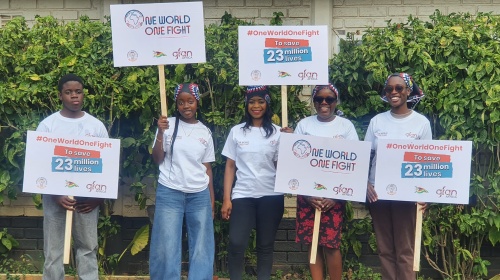
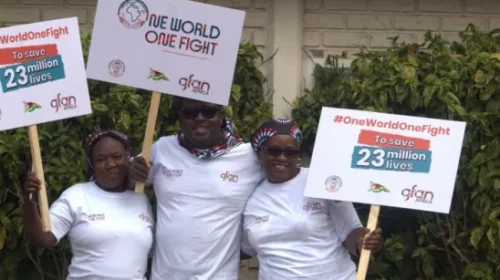
It is this collective effort that the Global Fund Advocates Network (GFAN) seeks to protect. Across Africa, GFAN is uniting community voices and civil society organisations to ensure the Global Fund remains fully funded. The goal is to save 23 million more lives and prevent 400 million new HIV infections by 2029.
Mr. Itai Rusike, the GFAN focal person in Zimbabwe poses for a phot with Otilia Tasikani and Edinah Masiiwa a renowned health advocate and feminist
Mr. Itai Rusike, GFAN’s focal person, says the movement is rallying governments, philanthropies, and civil society to mobilise resources for the Fund’s 8th Replenishment. This, he explains, is essential to maintaining gains in HIV prevention and treatment so that no generation faces the uncertainty Otilia once knew.
“Sixty-four million lives have been saved since the year 2000 through the Global Fund’s support across the world. Now we are saying, as we move forward for the 8th replenishment, we are aiming to save at least 23 million lives,” said Mr. Rusike.
Formed in 2011, GFAN brings together voices from across the continent in support of a fully funded Global Fund to fight AIDS, Tuberculosis, and Malaria. Through its One World, One Fight campaign, members are using fabric art to highlight the Fund’s impact and remind the world that investing in lifesaving antiretroviral drugs is an investment in the greater good.
“You find that the majority of people who are on treatment are not paying anything. Yes, there are other out-of-pocket costs, such as diagnostic and transport costs, but at least you are guaranteed you are getting the medicine. However, we are saying all that could be lost in the blink of an eye if we do not have a fully funded Global Fund.”
Other European countries have already pledged towards the Global Fund 8th replenishment. Spain and Luxembourg came together at the Fourth International Conference on Financing for Development in Seville, Spain, to jointly announce increased commitments to the Global Fund’s Eighth Replenishment. Spain pledged €145 million, and Luxembourg pledged €13.8 million – both marking an increase over their respective commitments at the Global Fund’s Seventh Replenishment in 2022.
These contributions will support low- and middle-income countries to accelerate progress against AIDS, tuberculosis (TB) and malaria during the 2027-2029 implementation period. By enabling locally driven, lifesaving programs and reinforcing resilient and sustainable health systems, the increased funding will also strengthen global health security and preparedness for future threats.
In Zimbabwe, GFAN has been instrumental in mobilising political commitment from the highest office to maintain, and ideally increase, the government’s current US$1 million contribution to the Fund. The network also works to maximise the impact of health investments and advance the right to health by uniting community and civil society voices.
The Global Fund has significantly contributed to Zimbabwe’s ARV programme, investing in prevention, testing, and treatment services, including the procurement of ARVs for individuals living with HIV. Since 2009, the Global Fund has contributed over US$1.61 billion to the fight against HIV in the country and US$1.9 billion for all grants. UNDP is supporting the delivery of the Global Fund’s NFM 3 (2021–2023) of more than US$481 million in Zimbabwe.
With Chinese bank loans overdue, Harare charges residents for major upgrades that were never completed.
By Linda Mujuru

Violet Razau fetches water from a makeshift well outside her home in Mabvuku, a suburb east of Harare, Zimbabwe. She has had no access to running water for years and says her 13-year-old son has never seen water flow from a tap. Residents of greater Harare like Razau are now being asked to help repay a multimillion-dollar loan for water infrastructure upgrades they say were never delivered.
HARARE, ZIMBABWE — The cholera outbreak that swept through Zimbabwe in 2008-2009 killed more than 4,000 people and sickened nearly 100,000. Parts of Harare and its surrounding suburbs were especially hard hit, and in the aftermath, attention fell on the unreliability of the capital city’s aging infrastructure. The government ultimately secured a US$144 million loan from China Exim Bank to overhaul the city’s water treatment network.
The promised upgrades never came, but now, the city wants ratepayers to foot the bill with a water levy introduced in March.
The loaned funds were supposed to upgrade water treatment plants, and pump stations, and roll out prepaid meters for 500,000 households.
Now, almost two decades later, citizens are being asked to repay a loan they say brought them no benefit.
“If the water situation had improved, maybe it would make sense,” says Prudence Hanyani, who was born and raised in Mabvuku, a suburb of the capital city that falls in its service area. “We never saw infrastructure development or better services. So what exactly are we paying for?”
Harare’s daily water production has steadily declined over the years due to a mix of deferred maintenance, contamination, and leaky pipes and valves in the distribution network, according to a 2015 World Bank report. In 2005, the city produced approximately 600 megaliters each day — that’s 600 million liters, or 158.5 million gallons, enough to fill 240 Olympic-size swimming pools. By 2008, daily output dropped to around 400 megaliters, then fluctuated between 400 and 600 megaliters over the next few years. However, by February this year, the supply had fallen further to just 350 megaliters per day.
Harare needs more than three times that amount, some 1,200 megaliters per day (317 million gallons), to meet the needs of residents and businesses, says Hardlife Mudzingwa, director of the advocacy group Community Water Alliance.
“What was a government responsibility is now being offloaded onto ordinary households already grappling with economic hardship,” says Mudzingwa, who has petitioned the government to account for how the money was used.
Taps in Mabvuku ran dry around the year 2000, Hanyani says, and residents haven’t had running water since. With six children to care for, she now spends up to US$3 a day to buy water for drinking, cooking, cleaning and sanitation, an added burden in a country where the average monthly household income fell to just US$88 in 2024. Now an additional water levy of US$1 is expected from her each month.

Prudence Hanyani collects water from a disused chicken brooder where she stores her household supply. Hanyani, who has lived without running water for over two decades, now faces a new government-imposed water levy tied to a failed Chinese loan project that promised but never delivered improved infrastructure.
Zimbabwe’s infrastructure funding gap is huge.
The country needs an estimated US$2 billion annually until 2032, of which the government can only fund about 20%. Key projects, such as the Harare water and sewer upgrade and major dam developments, have been financed through loans, particularly from China Exim Bank. But many of these projects, including the Harare upgrade, stalled after loan disbursements were suspended due to contract breaches.
Zimbabwe turned to China for loans in the early 2000s primarily due to limited access to more established financing sources, following years of economic sanctions, political isolation and a deteriorating credit rating. China emerged as a willing lender, offering infrastructure loans and investments under its Belt and Road initiative and Zimbabwe’s Look East policy. However, the country has faced challenges in repaying these loans, leading to significant arrears.
In 2018, China Exim Bank provided a US$153 million government concessional loan for the expansion of the Robert Gabriel Mugabe International Airport. While the project aimed to increase the airport’s capacity from 2.5 million to 6 million passengers annually, it was hampered by delays and financial mismanagement. By the end of 2021, Zimbabwe had accumulated $3 million in arrears on the loan.
Similarly, the Victoria Falls Airport Renovation and Expansion Project relied on a US$149.9 million loan, issued in 2012. The project was completed in 2016, but Zimbabwe’s arrears still ballooned to US$54 million by the end of 2021.
The Chinese water and sewer loan came at a time when various partners were funding infrastructure upgrades in the sector, Mudzingwa says. Following the 2008 cholera outbreak, international development partners including the United Nations Children’s Fund, the African Development Bank and the World Bank stepped in with additional support. In Harare, much of that funding was frittered away as the city failed to consult with residents in project planning or install systems to track revenue, manage budgets and detect fraud and waste. As a result, there has never been clarity on how exactly the money was used, even as millions of Zimbabweans have been left without access to safe, reliable water.
The China Exim Bank water loan had an 11-year repayment term with a four-year grace period and variable interest set at roughly 3.5%.
Although the project officially began in 2013, progress quickly stalled when Zimbabwe’s failure to repay an earlier loan prompted the bank to freeze disbursements. The earlier loan was for planned renovations to the dormant state-owned steel enterprise Ziscosteel, which were never completed. Harare City Council spent US$8 million from the water treatment loan on 25 luxury vehicles. The council claimed the cars were necessary for service delivery, but the lender disagreed. By 2017, only half the loan had been released, and disbursements remained frozen through 2020.
As of 2021, the Harare water project alone accounted for nearly US$67 million in unpaid debt. Across its portfolio, Zimbabwe owed China Exim Bank more than US$260 million in arrears spanning numerous sectors, from telecommunications to airports to defense.
“We are the ones drinking water,” says Harare Mayor Jacob Mafume. “Surely if Harare residents are drinking the water, they should pay for it themselves instead of asking the tax dollar of some Chipinge resident busy chasing a big frog.”
Ward 16 councillor Denford Ngadziore is calling for an audit. “If there are people who misused the money, they should be prosecuted. I presented this solution in the full council meeting, but other councilors disagreed with me,” he says. “We cannot make residents pay the loan without a clear report on how the loan was used.”

Violet Razau carries a bucket of water to her home in Mabvuku. Like many residents in this suburb of Harare, she has relied on makeshift sources for years. Despite having received no benefit from a long-stalled water project funded by a Chinese loan, residents are now expected to repay it through monthly levies.
Mafume insists that everything was done above board, arguing that the Land Rover Defenders and Amarok pickup trucks purchased for the project were not, in fact, luxury vehicles and that the utility has been hampered by its inability to purchase water treatment chemicals, which cost some US$3 million a month, according to the mayor’s office. “By and large, the equipment that was bought is there for anyone to go and see. And the good thing is that the new pumps and the old pumps, you can see the difference in performance,” he says. “Look at the old pumps, they look like they can explode at any time. So the work that the Chinese did on the plant speaks for itself.”
Mudzingwa argues that the loan acquisition process itself was flawed because a section of Zimbabwe’s 2013 Constitution says that any international treaty signed or carried out by the president or on the president’s behalf is not legally binding unless it is first approved by Parliament.
He says the provision reinforces the principle of legislative oversight in the treaty-making process. “The agreement was ratified by council in December 2013, but by then, the money had already been spent. Ratification should have come first,” he says.
Mudzingwa also disputes the mayor’s contention that promised equipment upgrades were made. “There’s no visible infrastructure to justify the cost. Now, residents are being asked to pay for a loan they didn’t benefit from. That’s unfair,” he says.
Mudzingwa worries the levy sets a precedent for ordinary citizens to foot the bill for loan projects characterized by improper procedure, opaque spending and unaccountable leadership.
Zimbabwe’s experience mirrors similar challenges seen in other countries reliant on Chinese infrastructure financing. Zambia canceled US$1.6 billion in undisbursed Chinese loans in 2022 amid a mounting debt crisis, while Sri Lanka was forced to award a Chinese company a 99-year lease on a newly-built port after defaulting on construction loans China had provided.
Back in Mabvuku, the water struggle remains deeply personal.
Violet Razau, a hairdresser and mother of two, has lived in the area since 1998. “As a child, I watered our garden with a hose. My 13-year-old son has never seen that. Now, I don’t even get a drop from council taps, so why should I pay?”
For Hanyani’s 70-year-old mother, Precious Mudimu, age has made the crisis harder. “I can’t carry water buckets. I rely on others, but they’re not always around. I’m old, I can’t work to pay levies,” she says. “This place feels like a desert.”
This story was first published in the Global Press Journal.
Pictures Credit: Linda Mujuru
Linda Mujuru is a Reporter-in-Residence based in Harare, Zimbabwe. A renowned international reporter and public speaker, she has spent nearly a decade covering human rights, the mining sector, the economy and public health. She holds an MBA from Midlands State University and both master’s and bachelor’s degrees in Journalism and Media Studies from the National University of Science and Technology in Zimbabwe. Linda is one of Global Press’ most widely read and syndicated journalists. In 2023, she won the Community Champion Award from the Institute for Nonprofit News for her story “Push for Gold Leaves a Toxic Legacy.”
https://drive.google.com/file/d/1aumzUJOc0Gt4jfmkcyHpHu3cXyZlcRNk/view?usp=sharing
CWGH PDF Safeguarding Policy 2024-2